What is Agentic AI for Customer Service?
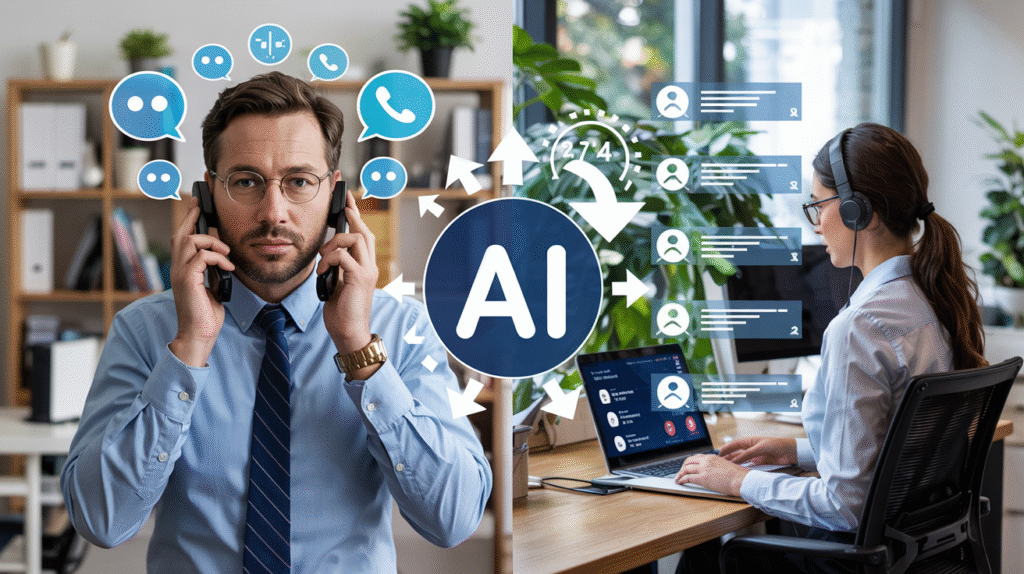
Agentic AI for customer service represents an advanced artificial intelligence system capable of autonomously executing complex customer support tasks through goal-oriented decision-making, contextual understanding, and multi-step problem-solving without requiring constant human supervision. Unlike traditional rule-based chatbots, agentic AI systems possess agency—the ability to understand customer intent, access multiple data sources, make intelligent decisions, and take appropriate actions to resolve issues while maintaining brand voice and personalization standards.
It’s 11 PM on a Friday. Sarah discovers her online order went to the wrong address. She needs help now—not Monday morning. She opens your chat expecting the usual robotic response. Instead, an agentic AI agent understands her problem, verifies her identity, checks delivery status, coordinates with shipping providers, arranges replacement delivery for tomorrow, and sends a discount code. Three minutes. Problem solved. Surprisingly human.
This is agentic AI transforming small business customer service automation.

Agentic AI vs Traditional Chatbots
Remember frustrating chatbots that barely understood “Where’s my order?” Traditional customer service automation failed because it couldn’t think, adapt, or act—only retrieve information.
According to Gartner, by 2029, agentic AI will autonomously resolve 80% of common customer service issues without human intervention, leading to a 30% reduction in operational costs. Cisco research reveals that 68% of customer interactions are expected to be handled by agentic AI by 2028—and 56% within the next 12 months.
Agentic workflow AI operates differently. These autonomous AI agents understand context, set goals, develop strategies, and execute multi-step workflows independently. When Sarah’s package went wrong, the AI didn’t just apologize—it actively solved the problem by orchestrating multiple systems simultaneously.
Why Traditional Automation Fails
Here’s what keeps small business owners awake: you know automation could help your overwhelmed support team, but every chatbot makes customers more frustrated. They can’t handle anything beyond basic questions, and customers inevitably demand “Let me speak to a real person!”
Research confirms this frustration. 52% of customers observed that AI responses are “too generic or unhelpful”, and 47% cite the inability to speak with a live human agent as their top annoyance with automated customer support systems.
Traditional rule-based automation prioritizes efficiency over problem-solving. It retrieves information but cannot adapt to unique customer service situations or take intelligent action based on context.
How Agentic AI Works For Customer Service
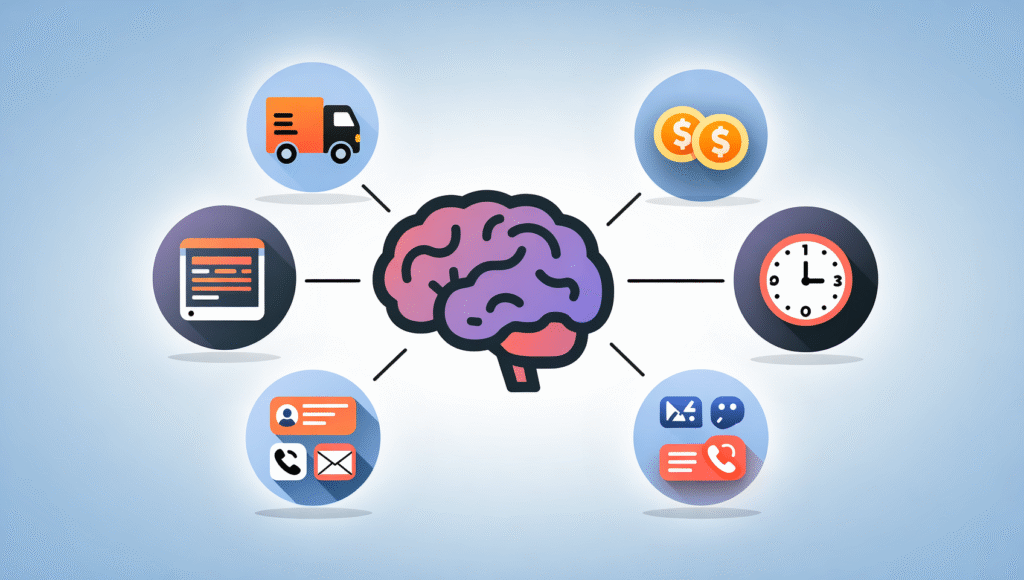
Agentic AI bridges this gap through three revolutionary capabilities that define goal-oriented AI customer service. First, contextual memory—remembering previous interactions, purchase history, and preferences across all channels. Second, workflow orchestration—connecting with your CRM, inventory system, shipping providers, and payment processors simultaneously. Third, continuous learning—getting smarter with every customer interaction.
The practical difference in customer service automation for small business? Traditional chatbots provide return policy links. Agentic AI examples include checking return eligibility, generating labels, scheduling pickups, processing refunds, and suggesting alternatives—all in one conversation.
Why Small Businesses Need Agentic AI
Small Team Customer Service Challenges
As a small business owner, you’re wearing too many hats already. Your support team consists of maybe two people (or just you) handling hundreds of customer inquiries while fulfilling orders, managing inventory, and growing the business.
The math doesn’t work. McKinsey research shows that organizations implementing AI see 2.4 times higher productivity, while customer support agents using generative AI boost productivity by 14% on average. For newer agents, that productivity gain jumps to 34%—transformative when you cannot afford expensive, experienced support staff.
This is where affordable AI customer service becomes critical for small team customer support tools and lean operations.
Capabilities Beyond Current Tools
Traditional support tools force your team to toggle between multiple systems—checking order status in one platform, customer history in another, inventory in a third. Agentic AI customer service software connects everything, giving your team and customers a single intelligent interface.
Salesforce research indicates that 54% of consumers don’t care how they interact with a company, as long as problems are fixed fast. Better yet, 39% of consumers are already comfortable with AI agents scheduling appointments, and 34% would work with an AI agent instead of a person to avoid repeating themselves.
Multi-agent AI systems handle routine inquiries at scale while your human team focuses on complex, high-value interactions requiring empathy and creative problem-solving. This represents true customer service automation that maintains brand personality.
ROI for Small Business Budgets
Here’s where affordable customer service AI gets interesting for businesses operating on tight margins. Industry data shows that AI-driven automation can reduce customer service costs by up to 40%, while typical implementations achieve 60-75% cost reductions. More importantly, for every $1 invested in AI, businesses see an average return of $3.50, with some companies reporting returns of $8 per dollar invested.
But ROI extends beyond direct cost savings. Reducing customer support response time with agentic AI from hours to seconds means happier customers who buy more and stay longer. Research confirms that retaining existing customers costs five to seven times less than acquiring new ones—and excellent automated support directly improves retention rates.
This cost-effective customer service AI delivers results even for customer service automation on small budgets.
Agentic AI Use Cases for Customer Support
Automating Repetitive Customer Inquiries
“Where’s my order?” “What’s your return policy?” “When will you restock?” Your team answers these questions dozens of times daily—soul-crushing work that wastes talent on how to automate repetitive customer service tasks.
Agentic AI handles these inquiries with personality and precision. It doesn’t regurgitate policy text; it checks real-time inventory, provides personalized recommendations based on browsing history, and proactively suggests solutions before customers ask. This personalized customer service automation maintains your unique voice.
Smart Ticket Routing with AI Agents
Not all customer issues are equal. A billing error affecting a $10,000 enterprise account deserves different priority than product specification questions. Agentic AI for managing multiple customer service channels analyzes incoming requests, assesses urgency based on customer lifetime value, issue complexity, and emotional sentiment, then routes each inquiry to the right resource—automated resolution, junior agent, or immediate escalation.
Research demonstrates that AI-powered ticket routing and categorization increases agent productivity by approximately 1.2 hours per day—that’s six extra hours weekly per agent freed for valuable work through intelligent customer service automation.
AI Agents Handling Autonomous Returns and Refunds
Returns are complicated. Customers bought wrong sizes, changed minds, or received damaged items. Each scenario requires checking policies, verifying purchase dates, calculating restocking fees, and coordinating logistics.
Using agentic AI to handle customer refunds automatically, the system evaluates return eligibility based on your specific policies, initiates refunds or store credit, generates return labels, updates inventory systems, and suggests alternative products—all autonomously. This represents advanced agentic AI use cases customer support teams leverage daily.
24/7 Agentic AI Support That Solves Problems
Industry statistics show 95% of customer interactions are expected to be AI-powered by 2025, enabling true automating after hours customer support for small business without night shifts. This isn’t just always-available FAQ access—agentic AI actually resolves issues at 2 AM by processing returns, updating subscriptions, troubleshooting account problems, and handling emergencies.
Customers in different time zones get instant, effective help. Your team wakes to resolved issues instead of overnight ticket backlogs. This is how to implement agentic ai in customer service for small business effectively.
Omnichannel Agentic AI Support Management
Self-directed AI systems orchestrate seamless experiences across email, chat, social media, and phone. When customers switch channels mid-conversation, agentic AI maintains complete context, eliminating frustrating repetition and creating cohesive experiences regardless of touchpoint.
Maintaining Human Touch with AI Automation
Why Human Touch Still Matters
Here’s the uncomfortable truth: customers are skeptical of automation. Verizon research found that 88% of consumers are satisfied with interactions handled mostly or fully by human agents, while only 60% feel the same about AI-driven interactions.
Why? Customers crave empathy, understanding, and confidence that someone actually cares. They want to feel heard, not processed. This emotional connection isn’t optional—it’s fundamental to building lasting relationships through humanized AI support and customer-centered automation.
Teaching Agentic AI Your Brand Voice
The secret to maintaining personalization with AI isn’t eliminating it—it’s training it properly for customer service automation that maintains brand personality. Agentic AI can match your unique personality, whether professional and formal, friendly and casual, or quirky and playful.
Train the system using your best customer service interactions as examples. The AI learns how your team phrases responses, what tone resonates, and what makes your brand distinctive. Over time, it doesn’t sound robotic—it sounds authentically like you, achieving true humanized customer service automation.
Personalization Through Context Awareness
Nothing feels more impersonal than being treated like a number. Agentic AI eliminates this through complete customer context—purchase history, previous support interactions, communication preferences, and subtle details like formal versus casual language preferences.
When returning customers contact support, the AI doesn’t start from zero. It references last interactions, acknowledges loyalty, and personalizes recommendations based on actual behavior. This is how the best way to automate customer support without losing personal touch works in practice.
Smart AI-to-Human Escalation
This is where agentic AI truly shines: knowing its limits. Research shows 52% of professionals observed that customers prefer human support agents for empathy and understanding, and 93.4% of consumers prefer interacting with humans over AI for complex or emotionally charged issues.
Smart AI recognizes emotional triggers—frustration, confusion, anger—and seamlessly escalates before situations deteriorate. When to use human agents vs AI agents in customer service becomes clear: routine tasks get AI efficiency; sensitive situations get human empathy. When escalating, AI provides complete context so customers never repeat themselves.
Research confirms that 74% of customers still want the option to escalate to a human agent. The key is offering choice and ensuring smooth, immediate escalation paths in your hybrid human-AI customer service model.
Can AI Understand Customer Emotions?
Current empathetic AI customer service technology uses sentiment analysis to detect emotional states. While AI cannot feel emotions, it can recognize linguistic patterns indicating frustration, confusion, or satisfaction, then adapt responses accordingly or trigger human escalation.
Honest limitations matter: AI excels at efficiency and consistency but cannot replicate genuine human empathy for deeply emotional situations. The goal isn’t replacing human emotional intelligence—it’s augmenting it strategically.

Agentic AI Implementation Roadmap
Step 1: Audit Your Current Workflow
Before automating anything, understand what you’re currently doing. Analyze support tickets from the past three months. What questions come up repeatedly? Which issues take longest to resolve? Where do customers express most frustration?
Create a simple spreadsheet categorizing inquiries by type, complexity, resolution time, and customer sentiment. This data reveals your biggest opportunities for setting up AI agents for customer service step by step.
Step 2: Choose Tasks to Automate
Start with the 80/20 rule: find the 20% of inquiry types consuming 80% of your team’s time. These are typically high-volume, low-complexity questions—order status, password resets, basic product information, shipping timelines, and return policy clarifications.
Avoid automating complex, emotional, or high-value interactions initially. Build confidence with quick wins before tackling sophisticated scenarios. This strategic approach to which customer service tasks should be automated first delivers measurable results.
Step 3: Select Your AI Platform
Look for platforms integrating seamlessly with existing tools—CRM, e-commerce platform, help desk software, and communication channels. Prioritize vendors offering pre-built connectors for your specific tech stack to minimize implementation complexity when integrating agentic AI with existing help desk software.
Consider scalability, pricing models (per-interaction versus monthly subscriptions), training requirements, and customer support quality. With 42% of contact centers planning to implement generative AI by 2025, the market offers numerous options at various price points suitable for small businesses seeking the best agentic ai customer service tools.
Step 4: Train Your AI Agents
Successful implementation requires investing time upfront in how to train agentic AI for customer support tasks properly. Feed your knowledge base articles, common support email threads, product documentation, and policy documents into the system. Many platforms now use existing content to automatically generate AI capabilities.
Test extensively before going live. Have team members role-play as difficult customers to identify knowledge gaps or inappropriate responses. This is critical for developing truly intelligent customer service automation.
Step 5: Configure Escalation Rules
Define clear criteria for human escalation: high-value customers, emotional language indicators, request types requiring judgment calls, or situations where AI confidence scores fall below certain thresholds in your agentic AI vs rule-based automation for support system.
Create seamless handoff protocols ensuring human agents receive complete context. Nothing frustrates customers more than repeating entire stories when transferred—this breaks trust in your AI-powered help desk.
Step 6: Monitor and Optimize
Launch with a pilot customer group before rolling out company-wide. Monitor key metrics obsessively: resolution rate, customer satisfaction scores, escalation frequency, and average handling time for reducing customer support response time with agentic AI.
Industry data shows successful deployments typically start at 40-50% automation rates and gradually improve with ongoing optimization. Set realistic initial targets and celebrate incremental progress rather than expecting immediate perfection. This is how much does agentic AI customer service cost for small business translates into tangible value over time.
Common Concerns About AI Customer Service
Will Customers Accept AI Support?
Surprisingly, yes—if implemented thoughtfully. Research shows 61% of new buyers choose faster AI-produced responses over waiting for human agents, and 67% of consumers worldwide have engaged with chatbots for customer support in the past year.
The key is transparency. Let customers know they’re interacting with AI while making human support readily available if needed. When AI performs well, customers genuinely don’t mind—they care about getting problems solved quickly, not who (or what) solves them. This addresses handling customer complaints automatically without frustrating customers.
What If AI Makes Mistakes?
Valid concern. That’s why you implement safeguards: confidence thresholds triggering human review for uncertain situations, regular audits of AI interactions, continuous training based on errors, and clear disclaimers for critical information like billing or legal matters.
Industry data shows 44% of organizations experienced negative consequences from rushing AI implementation without proper planning. Take implementation seriously, test thoroughly, and maintain human oversight, especially early on. Quality control is essential for automated response systems.
Do I Need Technical Skills?
Modern agentic AI platforms are increasingly user-friendly, with visual builders, template libraries, and no-code configuration options. Many vendors offer white-glove onboarding, training, and ongoing support.
Implementation timelines have dramatically improved. Research indicates automation platforms now leverage mature technology and proven methodologies to deliver production-ready systems in 45-60 days, compared to 6-12 months historically. The technology has matured significantly, making it accessible even for non-technical small business owners seeking easy-to-implement AI solutions.
Best Practices for AI Customer Service
Be Transparent About AI Use
Research shows 58% of professionals advocate for full transparency about AI use in customer interactions. Don’t trick customers into thinking they’re talking to humans. Clearly disclose AI involvement while emphasizing human support remains available.
Transparency builds trust. Customers appreciate honesty and are more forgiving of occasional AI limitations when they know what they’re interacting with. This represents best practices for implementing agentic AI in customer support.
Maintain Human Support for Complex Issues
Design your system with hybrid intelligence from day one. Let AI handle what it does best—speed, consistency, always-available support—while reserving human agents for situations requiring empathy, creative problem-solving, and judgment calls. Keep humans in the loop for complex customer service issues always.
Keep AI Knowledge Updated
Your business evolves. New products launch, policies change, and seasonal promotions come and go. Establish processes for keeping your AI’s knowledge current—ideally assigning someone to review and update training data monthly.
Stale information erodes customer trust faster than any other AI failure mode. Regular updates ensure accurate, relevant responses in your self-service customer support automation.
Key Metrics for AI Support
Track both operational metrics (resolution rate, handling time, cost per interaction) and experience metrics (customer satisfaction scores, Net Promoter Score, escalation rate, repeat contact rate). The best AI implementation delivers improvements across both dimensions.
Industry benchmarks show successful implementations achieve 14% productivity increases, 1.2 additional productive hours per agent daily, and customer satisfaction improvements of up to 200%. These are measuring success of agentic AI customer service indicators that matter.
Customer Feedback and Iteration
Create feedback loops with customers through post-interaction surveys, sentiment tracking, and regular review of escalated cases. Use this data to continuously refine AI training, adjust escalation triggers, and improve response quality.
The best automated support systems improve continuously based on real customer interactions and feedback, not static programming.
Getting Started with Agentic AI
Quick Implementation Wins
Start small but start now. Begin by documenting your top 10 most common customer inquiries and their ideal responses. This becomes the foundation for your AI training data.
Next, identify one specific, high-volume inquiry type to automate first—perhaps order status tracking or return policy questions. Prove the concept with narrow focus before expanding scope. These are getting started with agentic AI customer support actions you can take this week.
Connecting to Your AI Strategy
Customer service automation isn’t isolated—it’s one component of your comprehensive small business AI strategy. The insights and capabilities you develop here extend to sales, marketing, operations, and product development through broader agentic AI for small business applications.
For the complete picture of how agentic AI transforms operations beyond just customer service, explore our main guide on Agentic AI for Small Business: Use Cases & Roadmap. You’ll discover how the same underlying technology revolutionizes everything from inventory management to personalized marketing in your comprehensive agentic AI implementation roadmap.
Conclusion: Automation That Serves Your Customers
The future of customer service isn’t choosing between AI efficiency and human empathy—it’s intelligently combining both. Agentic AI represents a fundamental shift from robotic chatbots to intelligent assistants that genuinely solve problems while maintaining the personal touch your customers deserve.
With 80% of companies expected to adopt AI-powered customer service by 2025 and the technology delivering average ROIs of $3.50 per dollar invested, the question isn’t whether to implement agentic AI—it’s how quickly you can start.
Your customers expect instant, personalized support. Your team deserves to focus on meaningful work instead of answering the same questions repeatedly. Your business needs scalable growth without proportionally scaling costs.
Agentic AI makes all three possible. The technology is mature, accessible, and proven. Small businesses implementing it thoughtfully create competitive advantages that larger, slower-moving competitors struggle to match.
Start with one use case. Measure results. Iterate and expand. Before long, you’ll deliver customer service experiences that feel surprisingly human—because you’ve given your AI the intelligence to act with purpose and your team the freedom to focus on what humans do best.
Frequently Asked Questions(FAQs) :
What is agentic AI for customer service?
Answer: Agentic AI for customer service is an advanced autonomous artificial intelligence system that independently handles customer support tasks through goal-oriented decision-making and multi-step problem-solving. Unlike traditional chatbots that follow rigid scripts, agentic AI understands context, accesses multiple data sources, makes intelligent decisions, and takes appropriate actions to resolve customer issues—all while maintaining your brand’s voice and personalization standards. According to Gartner, agentic AI will autonomously resolve 80% of common customer service issues by 2029, leading to a 30% reduction in operational costs.
How is agentic AI different from traditional chatbots?
Answer: The key difference between agentic AI and traditional chatbots lies in autonomy and problem-solving capability. Traditional chatbots follow pre-programmed scripts and can only respond to specific keywords or phrases, often frustrating customers with generic responses. Agentic AI, however, possesses agency—it can understand complex queries, maintain conversation context, orchestrate workflows across multiple systems, make independent decisions, and execute multi-step actions to actually solve problems. Research shows that 52% of customers find AI responses “too generic or unhelpful” with traditional systems, while agentic AI delivers contextual, personalized solutions that feel remarkably human.
Can small businesses afford agentic AI customer service?
Answer: Yes, agentic AI is increasingly affordable for small businesses, with implementations now delivering significant ROI. Industry data shows that for every $1 invested in AI, businesses see an average return of $3.50, with some companies reporting $8 per dollar invested. AI-driven automation can reduce customer service costs by 40-75%, while modern automation platforms deliver production-ready systems in 45-60 days (compared to 6-12 months historically). Many agentic AI platforms now offer scalable pricing models—per-interaction or monthly subscriptions—specifically designed for small business budgets, eliminating the need for expensive custom development or large upfront investments.
Will customers hate talking to AI instead of humans?
Answer: Surprisingly, no—when implemented properly. Research reveals that 61% of new buyers choose faster AI-produced responses over waiting for human agents, and 67% of consumers worldwide have engaged with chatbots for customer support in the past year. The key is transparency and quality: customers care about getting problems solved quickly, not whether AI or humans solve them. However, 74% of customers still want the option to escalate to human agents when needed. The winning strategy is hybrid: let agentic AI handle routine inquiries instantly while making human support readily available for complex or emotional situations.
How do I maintain the human touch with automated customer service?
Answer: Maintaining human touch with agentic AI requires four key strategies: (1) Train your AI on your brand’s unique voice and personality using actual customer service interactions as examples; (2) Implement contextual awareness so AI remembers customer history and personalizes every interaction; (3) Set up smart escalation rules that detect emotional triggers (frustration, confusion, anger) and seamlessly transfer to human agents with complete context; (4) Be transparent about AI usage while emphasizing human support availability. Research shows 88% of consumers are satisfied with human interactions versus 60% with AI—but the gap closes dramatically when AI is properly trained on brand personality and equipped with intelligent escalation protocols.
What customer service tasks can agentic AI automate?
Answer: Agentic AI can autonomously handle a wide range of customer service tasks including: order status tracking and shipment updates, return and refund processing, password resets and account access issues, billing inquiries and payment method updates, product information and recommendations, appointment scheduling and rescheduling, ticket routing and prioritization, FAQ responses with contextual personalization, after-hours support for urgent issues, and multi-channel conversation management across email, chat, and social media. According to industry data, successful implementations typically start at 40-50% automation rates and gradually improve with optimization. The key is starting with high-volume, low-complexity tasks before expanding to more sophisticated workflows.
How long does it take to implement agentic AI customer service?
Answer: Modern agentic AI implementations are significantly faster than traditional automation projects. Research indicates that automation platforms now leverage mature technology and proven methodologies to deliver production-ready systems in 45-60 days, compared to 6-12 months historically. The implementation timeline typically includes: Week 1-2 (audit current workflows and identify automation opportunities), Week 3-4 (select platform and configure integrations), Week 5-6 (train AI on business knowledge and brand voice), Week 7-8 (pilot testing with select customer group), and Week 9+ (gradual rollout with continuous optimization). The key to faster implementation is starting with one specific, high-volume use case to prove value before expanding scope.
What ROI can small businesses expect from agentic AI?
Answer: Small businesses implementing agentic AI typically see substantial ROI across multiple dimensions. Financial returns include: $3.50 average return for every $1 invested (industry average), 40-75% reduction in customer service operational costs, and significantly lower cost per interaction compared to human-only support. Operational improvements include: 14% average productivity increase for support teams, 1.2 additional productive hours per agent daily (6 hours weekly), and customer satisfaction improvements of up to 200%. Strategic benefits include: 24/7 support availability without night shifts, ability to scale support without proportionally increasing headcount, and faster response times (from hours to seconds) that improve customer retention—which costs 5-7 times less than acquiring new customers.
Do I need technical skills to implement agentic AI?
Answer: No, modern agentic AI platforms are designed for non-technical users. Today’s solutions feature visual builders, template libraries, no-code configuration options, and pre-built integrations with popular CRM, e-commerce, and help desk platforms. Many vendors offer white-glove onboarding, comprehensive training, and ongoing support to ensure successful implementation regardless of technical expertise. The process typically involves describing business procedures in natural language rather than writing code. That said, having basic understanding of your customer service workflow, clear documentation of common inquiries and responses, and designated team members to manage AI training and optimization will significantly improve outcomes—but deep technical knowledge is not required.
How does agentic AI handle complex or emotional customer issues?
Answer: Agentic AI uses advanced sentiment analysis and natural language processing to detect emotional triggers in customer communications—words, phrases, or patterns indicating frustration, confusion, anger, or distress. When emotional intensity exceeds defined thresholds or when issues become too complex for autonomous resolution, the AI automatically escalates to human agents with complete conversation context, so customers never repeat themselves. Research shows that 93.4% of consumers prefer interacting with humans for complex or emotionally charged issues, and smart AI systems respect this preference. The most effective implementations use AI for speed and consistency on routine matters while reserving human empathy and judgment for sensitive situations—creating a hybrid human-AI customer service model that delivers both efficiency and emotional intelligence.