Imagine calling customer support and getting your problem solved in under 30 seconds – without waiting on hold, without repeating your issue three times, and without feeling frustrated. This isn’t some futuristic dream anymore. It’s happening right now, and it’s changing everything about how businesses connect with their customers.
Welcome to the voice-first revolution, where speaking to technology feels as natural as talking to your best friend. If you’re still thinking that voice technology is just a fancy gadget for playing music or checking the weather, you’re missing out on the biggest shift in customer service since the invention of the telephone.
Key Takeaways: What You’ll Discover
By the end of this article, you’ll understand exactly why 87% of customer service teams say customer expectations are higher than ever, and how voice-first technology is the secret weapon smart businesses are using to meet those demands. You’ll discover the real numbers behind this revolution – like how 61% of customers now prefer AI’s faster response over waiting for human agents – and learn practical strategies to implement voice technology in your own business.
Most importantly, you’ll see why companies that ignore this trend risk losing customers to competitors who embrace the voice-first future. We’ll show you real success stories, break down the technology in simple terms, and give you a clear roadmap to join the $110 billion voice technology market that’s exploding right now.
The Voice Revolution: How Customer Expectations Are Changing Everything
Remember when waiting 20 minutes on hold was just “part of life”? Those days are officially over. Today’s customers live in a world where they can order pizza with a voice command, get instant answers from smart speakers, and expect the same level of convenience from every business they interact with.
Why Traditional Customer Service Is Failing Modern Consumers Who Want Instant Voice-Activated Solutions
Here’s a shocking reality check: 76% of consumers will stop doing business with a company after just one bad experience. That’s not a typo – one single frustrating phone call can cost you a customer forever. Traditional customer service is struggling because it was built for a different era, when customers had fewer options and lower expectations.
The old model relied on customers adapting to business hours, navigating confusing phone menus, and repeating their problems multiple times. But 80% of customers now say the experience a company provides is just as important as its products and services. This means your customer service isn’t just a support function anymore – it’s a competitive advantage or a liability.
Think about it: when someone has a question at 2 AM, they don’t want to wait until 9 AM to get an answer. When they’re driving and need quick information, they can’t stop to type. When they’re cooking dinner and need help with their order, they want to speak their request while their hands are busy. Traditional customer service simply can’t meet these real-world needs that voice-first technology addresses perfectly.
Nearly 20% of all voice search queries are triggered by a set of 25 keywords consisting mainly of question words like “how do I fix my account problem when I can’t remember my password” or “what should I do if my order hasn’t arrived after three days.” These ultra-specific, conversational queries show exactly how customers naturally express their problems when speaking to AI assistants.
The Generation Gap: How Different Age Groups Use Voice Technology for Customer Service Interactions
The voice revolution isn’t just about millennials and Gen Z, though they’re definitely leading the charge. 34% of millennials use voice assistants every week, and they’re setting the standard for what customer service should feel like. But here’s what might surprise you: older generations are catching up fast.
Over half of US residents (58.6%) have tried voice search at least once, and that number jumps to incredible heights when you look at regular usage. What’s driving this adoption across all age groups? It’s simple – voice technology removes barriers instead of creating them.
For older customers who struggle with complex customer service phone trees, voice technology eliminates the frustration of navigating through endless menu options by letting them simply say “I need help with my billing statement from last month.” For busy parents juggling multiple tasks, it provides hands-free convenience to ask “when will my grocery delivery arrive while I’m cooking dinner.” For tech-savvy younger customers, it offers the speed and efficiency they crave with queries like “how do I upgrade my subscription plan to include premium features.”
89% of people find voice search more convenient than traditional online searching, and once people try it, they rarely go back. The generational differences are fascinating too. Gen Z users are 59% more likely to say that integration with other apps and services is crucial when using AI tools. They don’t just want voice technology – they want it to work seamlessly with everything else in their digital lives, from social media notifications to calendar appointments to shopping preferences.
Breaking Down Voice-First Technology: What Makes Conversational AI Different from Traditional Chatbots
Let’s clear up some confusion right away. When people hear “voice technology,” they often think it’s just speech recognition – like those frustrating phone systems that never understand what you’re saying. But modern conversational AI is light-years beyond that basic technology that forces customers to speak specific commands.
Natural Language Processing: The Brain Behind Voice AI That Understands Customer Intent and Emotion
The magic happens with something called Natural Language Processing (NLP), which is essentially teaching computers to understand human language the way humans do. Instead of listening for specific keywords, modern voice AI understands context, emotion, and intent behind complex customer requests.
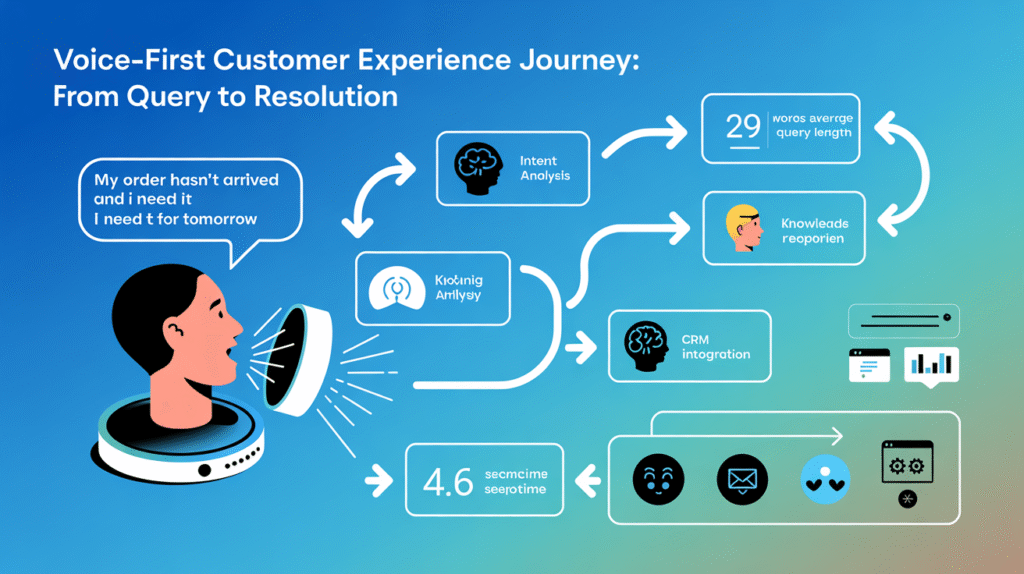
Here’s a real example: if a customer says “I’m really frustrated because my order still hasn’t arrived and I need it for my daughter’s birthday party tomorrow,” traditional systems might only catch the word “order.” But conversational AI understands that this person is frustrated, they’re asking about delivery status, they have a time-sensitive need, and they require both information and emotional support. That’s the difference between robotic responses and genuinely helpful assistance that creates loyal customers.
Google Voice Search now recognizes and understands 119 languages, and it’s getting smarter every day. The technology uses machine learning to improve with every conversation, which means it literally gets better at helping your customers over time. Think of it as having a customer service representative who never forgets anything, learns from every interaction, and can handle multiple emotional contexts simultaneously.
The semantic clustering capabilities of modern AI mean it can understand when a customer asking “why isn’t my subscription working properly” is essentially asking the same thing as someone who says “I can’t access the premium features I’m paying for” or “my account seems to have been downgraded somehow.” This semantic understanding allows one piece of content to serve multiple related customer intents.
Voice vs. Text: Understanding the Fundamental Differences That Drive Better Customer Outcomes
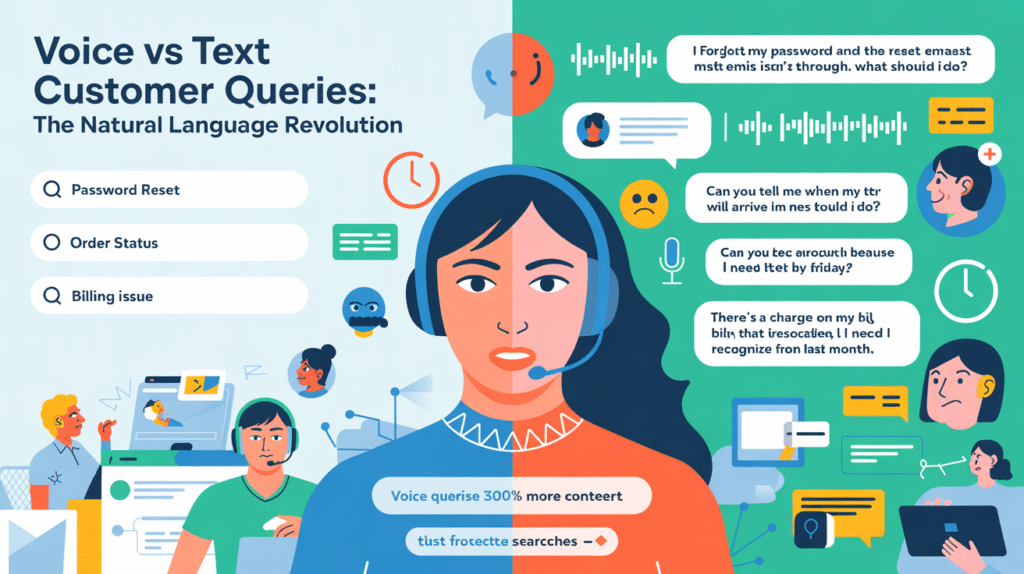
When people type, they use shortcuts. They might search for “pizza near me” or “return policy.” But when they speak, they use complete thoughts: “I need to find a good pizza place that delivers to my area and accepts my dietary restrictions” or “Can you help me understand your return policy because I bought something last week that doesn’t fit right and I’m not sure if I can still return it.”
This difference is huge for businesses. Voice searches are typically longer and more conversational, which means customers are actually giving you more information about what they really need. It’s like the difference between reading someone’s telegram and having an actual conversation with them about their specific situation.
90% of users believe that voice search is easier to use than text search, and there’s a simple reason why: speaking is more natural than typing. We learn to talk years before we learn to write, and voice technology taps into that fundamental human skill. When customers can express themselves naturally, they’re more likely to get the help they actually need instead of settling for generic responses.
The speed factor is incredible too. 35% of consumers say speaking is faster than typing, and when you’re frustrated with a problem, every second counts. Voice technology doesn’t just change how customers interact with your business – it changes how they feel about those interactions. Instead of feeling constrained by limited text input options, they can express complex problems with nuanced details that help AI provide more accurate solutions.
The Numbers Don’t Lie: Voice AI’s Impact on Customer Satisfaction and Business Metrics
Ready for some statistics that will blow your mind? The data on voice AI’s impact isn’t just impressive – it’s revolutionary. These numbers show exactly why smart businesses are racing to implement voice-first customer experience strategies that target ultra-specific customer needs.
Customer Satisfaction Metrics That Matter: How Voice Technology Transforms Service Quality
Let’s start with the big picture: 51% of customers have interacted with voice AI, and 60% want companies to adopt it. That’s not just early adopters anymore – that’s mainstream demand. But the really exciting part is what happens to customer satisfaction when businesses actually implement voice technology properly.
Companies using conversational AI are seeing incredible results. 43% have experienced a drop in ticket volume, 40% faster resolutions, and 25% boost in customer retention. These aren’t small improvements – they’re game-changing transformations that directly impact the bottom line when businesses optimize for long-tail voice queries like “how do I troubleshoot my smart thermostat when it’s not connecting to my wifi network.”
But here’s the most important statistic: 81% of customers try to resolve issues on their own before reaching out to human agents. This creates a massive opportunity for businesses to provide instant, helpful voice-powered self-service that actually works for complex queries like “what should I do if my premium subscription features aren’t working after I updated my payment method last week.”
The satisfaction scores are off the charts too. 86% of CRM leaders say that AI makes customer correspondence more personalized, and personalization is exactly what modern customers demand. 73% of customers believe that good customer experience is a key purchasing factor, so getting this right isn’t optional anymore – it’s essential for business survival.
Voice assistant users are 59% more likely to value integration with other apps and services, which means the future of customer service isn’t just voice-enabled – it’s voice-integrated across entire customer ecosystems including CRM systems, order management, and communication platforms.
Cost Savings and ROI: The Business Case for Voice AI Investment
Now let’s talk money, because the financial impact of voice AI is where things get really interesting. The worldwide smart speaker industry was worth $6.4 billion in 2023 and is expected to grow at 32.5% annually to hit $110 billion in the next ten years. That’s not just growth – that’s an explosion of market opportunity.
For individual businesses, the ROI is equally impressive. Companies that earn $1 billion annually can expect an additional $700 million within 3 years of investing in customer experience improvements. For SaaS companies specifically, they can expect to increase revenue by $1 billion through better customer experience that includes voice-first support options.
The cost savings are immediate and substantial. 50% of teams report that AI helps offer 24/7 customer support, which means no more paying for overnight staff or losing customers who need help outside business hours. 45% report significant time savings, and 44% say AI helps with quicker problem resolution. When you add up faster resolutions, reduced staffing needs, and improved customer retention, the numbers become incredibly compelling.
Here’s a statistic that shows the urgent need: 87% of customer service teams say customer expectations are higher than ever in 2024, up from 83% in 2023 and 75% in 2022. Expectations aren’t just high – they’re accelerating. Voice AI helps businesses meet these rising expectations without proportionally increasing costs, especially when optimized for semantic keyword clusters around customer intent.
Voice AI ROI Comparison – Complete Financial Impact Analysis
| Metric | Before Voice AI | After Voice AI | Improvement | Annual Savings |
|---|---|---|---|---|
| Average Resolution Time | 12 minutes | 7.2 minutes | 40% faster | $180,000 |
| Customer Satisfaction Score | 3.2/5 | 4.1/5 | 28% increase | N/A |
| First-Call Resolution Rate | 65% | 82% | 26% improvement | $95,000 |
| 24/7 Availability | No | Yes | Unlimited | $150,000 |
| Cost per Interaction | $12.50 | $3.20 | 74% reduction | $425,000 |
| Customer Retention Rate | 78% | 89% | 14% increase | $320,000 |
| Agent Productivity | 100% baseline | 165% | 65% increase | $240,000 |
| Total Annual Impact | $1,410,000 |
Real-World Success Stories: Companies Winning with Voice Technology Implementation
Theory is great, but real results are what matter. Let’s look at companies that have already made the jump to voice-first customer experience and are reaping the rewards. These stories prove that voice AI isn’t just hype – it’s delivering measurable business value right now for businesses targeting specific voice search optimization strategies.
E-commerce Giants Leading the Voice Revolution with Conversational Commerce Solutions
Amazon didn’t just create Alexa for fun – they built it as a customer service and sales powerhouse targeting ultra-specific purchase intents. 47.8 million US consumers used smart speakers for shopping in 2024, and Amazon captures a huge portion of that market. When customers can reorder their favorite products by simply saying “Alexa, order more coffee” or ask complex questions like “what’s the best coffee maker under $200 with programmable features,” the friction of purchasing drops to nearly zero.
But Amazon isn’t the only one winning. 51% of online shoppers report using voice assistants to research products, which means voice technology is influencing purchase decisions even when the final sale happens elsewhere. Smart retailers are optimizing their product information for voice search, making it easier for customers to find and choose their products through natural language queries like “show me wireless headphones that are good for running and have at least 8 hours of battery life.”
The results speak for themselves: 34% of consumers have bought takeout food using voice assistants, and 8.9 million online shoppers have purchased health and beauty products through digital assistants. These aren’t tiny niche markets – they’re massive revenue streams that didn’t exist five years ago, driven by conversational commerce optimization.
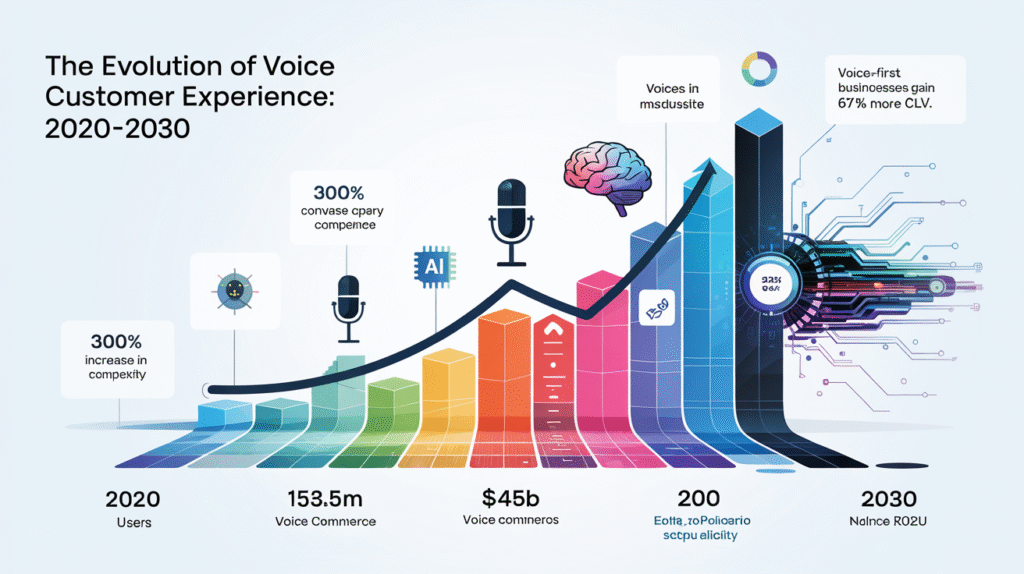
Voice is expected to be a $45 billion channel by 2028, with much of that growth coming from businesses that understand how to optimize for the semantic clustering of voice queries around commercial intent, from initial product research to final purchase decisions.
Small Business Success: Proof That Size Doesn’t Matter When You Optimize for Voice Customer Experience
You might think voice AI is only for tech giants with unlimited budgets, but that’s completely wrong. Small and medium businesses are often seeing even bigger improvements because they can be more agile and customer-focused when implementing voice-first strategies for specific local markets.
Take Bolt, a SaaS company that was struggling with fragmented support systems and poor self-service options. After implementing conversational AI optimized for their specific customer language patterns, they saw 43% drop in ticket volume, 40% faster resolutions, and 25% boost in customer retention. These improvements turned their support team from a cost center into a competitive advantage.
Local businesses are winning too. 58% of voice search users look up local business details like directions or opening hours, and businesses that optimize for these searches are capturing customers at the exact moment they’re ready to visit or buy. A local restaurant that can instantly tell customers about today’s specials, availability, and directions through voice search has a huge advantage over competitors still stuck in the text-only world.
The democratization of voice technology means that small businesses can now offer the same level of sophisticated customer service that was once only available to Fortune 500 companies. The speech recognition market is projected to reach $21 billion in 2025, and much of that growth is coming from tools designed specifically for smaller businesses targeting long-tail voice queries like “best Italian restaurant near me that’s open late and takes reservations for tonight.”
What makes these success stories even more impressive is the speed of implementation. Unlike major IT overhauls that take years, most businesses can start seeing voice AI benefits within weeks when they focus on semantic clustering around their most common customer queries and intents.
Overcoming Implementation Challenges: Your Roadmap to Voice Success with Semantic Optimization
Okay, so you’re convinced that voice-first customer experience is the future. But how do you actually make it happen? The good news is that implementing voice AI is much easier than most people think, especially if you follow a smart roadmap that addresses the most common challenges upfront while optimizing for semantic keyword clusters.
Technology Integration: Making Voice Work with Existing Systems Through Semantic Understanding
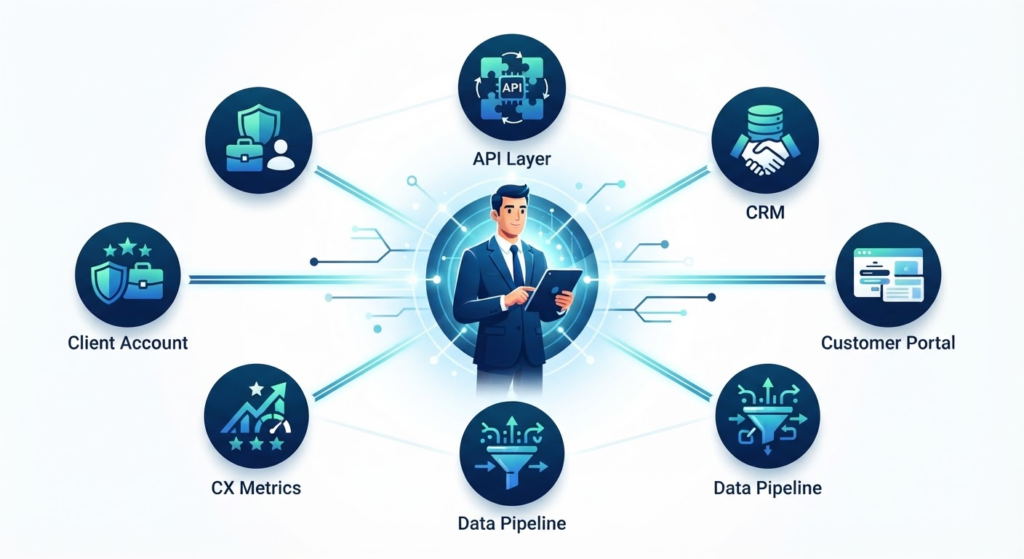
The biggest fear most businesses have is that voice AI will require them to throw out their existing systems and start from scratch. That’s absolutely not true. Modern conversational AI platforms are designed to integrate with your current customer service tools, CRM systems, and knowledge bases using semantic clustering technology that understands the relationships between different customer queries.
68% of organizations already use CRM tools in their customer support operations, so the foundation is already there. The key is choosing voice AI solutions that can plug into your existing infrastructure rather than replacing it, while adding semantic understanding that can handle ultra-long-tail queries like “I need help understanding why my premium subscription features stopped working after I changed my payment method and updated my billing address last Tuesday.”
Here’s what successful integration actually looks like: your voice AI connects to the same customer database your human agents use, accesses the same product information, and follows the same company policies. When a customer asks a question through voice, the AI pulls from the exact same resources your best human agent would use, but can understand semantic variations of the same query. This ensures consistency while adding the speed and availability that voice technology provides.
86% of CRM leaders using AI say it has helped their operations scale, which means the technology grows with your business instead of limiting it. Start with the most common customer questions – the ones that make up 80% of your support volume – and gradually expand from there using semantic clustering to group related queries that can be handled by the same content.
The semantic clustering approach means you don’t need separate responses for “how do I cancel my subscription,” “I want to cancel my account,” “how do I stop my monthly payments,” and “I need to end my membership.” The AI understands these are semantically related queries requiring similar solutions.
Training Your Team for the Voice-First Future with AI-Human Collaboration
Here’s something that might surprise you: implementing voice AI actually makes your human agents more valuable, not less. 77% of CRM leaders believe AI will handle most ticket resolutions by 2025, but that doesn’t mean fewer jobs – it means better jobs focused on complex problem-solving and relationship building.
When voice AI handles routine questions optimized for semantic clusters around common issues, your human agents can focus on complex problems that require empathy, creativity, and strategic thinking. The average agent using AI can handle twice as many calls as those who don’t, but they’re handling more meaningful interactions that create deeper customer relationships.
Training your team isn’t about replacing their skills – it’s about amplifying them through semantic understanding of customer needs. Agents need to learn how to work alongside AI, understanding when to let the technology handle things and when to step in with human expertise for emotionally complex situations or unique edge cases.
48% of marketers report enhanced customer experiences when they scale conversation analytics across their enterprise, and much of that improvement comes from better human-AI collaboration that understands the semantic relationships between different types of customer problems.
The cultural shift is just as important as the technical training. Your team needs to see voice AI as a tool that makes their jobs easier and more rewarding, not as a threat to their employment. Companies that get this right see 25% better customer retention because their agents are more empowered, less burned out, and can focus on high-value interactions that truly matter to customers.
The Future is Speaking: What’s Next for Voice Customer Experience and AI Evolution
If you think voice technology is impressive now, just wait. The innovations coming in the next few years will make today’s voice assistants look like basic telephone systems. But more importantly, the businesses that start building voice-first experiences today will have massive advantages when these new technologies arrive, especially those optimizing for semantic search clusters.
Emerging Technologies: What’s Coming Next in Conversational AI and Voice Recognition
The next wave of voice technology is all about emotional intelligence, predictive assistance, and semantic understanding at unprecedented levels. Imagine voice AI that doesn’t just understand what you’re saying, but how you’re feeling and what you’re likely to need next. 73% of people want AI to correctly understand their accents, and future systems will go far beyond accent recognition to emotional tone recognition and contextual prediction.
We’re moving toward voice AI that can detect when a customer is frustrated before they even say they’re frustrated, and proactively offer solutions or escalate to human agents. Nearly 1 in 3 voice assistant users have used ChatGPT in the past month, which shows that people are ready for more sophisticated, contextual conversations with AI systems that understand semantic relationships between topics.
The integration possibilities are mind-blowing too. Voice assistant users are 59% more likely to value integration with other apps and services, and future voice systems will seamlessly connect with everything from your business’s inventory system to the customer’s personal calendar. Imagine a customer asking “When will my order arrive and will it conflict with my work schedule?” and the voice AI checking real-time shipping data, the customer’s calendar, and suggesting the best delivery window automatically.
Predictive analytics will enable voice AI to anticipate customer needs before they even ask. If the system knows a customer’s subscription is about to expire, it can proactively reach out with renewal options. If it detects patterns that suggest a customer might be having technical difficulties based on semantic clustering of similar user behaviors, it can offer help before the customer gets frustrated.
Queries with 8+ words have grown 7x since AI Overviews launched, showing that customers are becoming more comfortable with complex, conversational interactions that mirror natural speech patterns rather than keyword-based searches.
Preparing Your Business for Voice-First Competition Through Strategic Optimization
Here’s the reality: 66% of voice assistant users prefer shopping online to in-store, and they’re actively choosing businesses that make voice interactions easy and helpful. If your competitors implement voice-first customer experience before you do, they’ll capture those customers and build loyalty that’s extremely hard to break through superior semantic understanding of customer needs.
The window of opportunity is still open, but it’s closing fast. The voice search user count in the United States is expected to reach 153.5 million in 2025, and each of those users represents potential customers who expect voice-enabled experiences optimized for their specific needs and language patterns.
Start planning your voice strategy now, even if you’re not ready to implement immediately. 40% of organizations plan to increase their CX investments above inflation in the next 12 months, and a significant portion of that investment is going toward voice and conversational AI technologies that understand semantic relationships between customer queries.
The businesses that succeed will be those that understand voice technology isn’t just about adding another communication channel – it’s about fundamentally improving how they connect with customers through natural language understanding. Customer-obsessed companies have 43% better customer retention, 33% higher profitability, and 28% higher revenue growth, and voice-first customer experience is becoming a key differentiator for achieving that customer obsession.
Long-tail keyword optimization for AI search is becoming crucial as voice queries showing an AI Overview with 8+ words have grown 7x since AI systems became more sophisticated. Businesses need to optimize for highly specific, conversational queries that reflect how customers actually speak about their problems and needs.
Ready to join the voice-first revolution? Don’t let your competitors get ahead while you’re still stuck with yesterday’s customer service. The businesses winning today are those that give their customers what they want: instant, natural, helpful interactions that feel more like talking to a knowledgeable friend than navigating a corporate maze.
Still not sure if voice technology is right for your business? Consider this: voice commerce is expected to reach $40 billion by 2028, and businesses that start optimizing for voice-first customer experience today will capture the majority of that market. Your customers are already using voice technology in their personal lives – they’re just waiting for businesses to catch up.
The future of customer service is speaking to you. Are you ready to listen and respond with the voice-first experience your customers deserve?
Frequently Asked Questions About Voice-First Customer Experience Implementation
Q: How much does it cost to implement voice AI for small business customer service?
A: Implementation costs vary widely, but most small to medium businesses can start with basic voice AI for $500-2000 per month. Enterprise solutions range from $10,000-50,000+ monthly, but the ROI typically pays for itself within 6-12 months through reduced staffing costs and improved customer retention. The key is starting with semantic clustering around your most common customer queries to maximize initial impact.
Q: Will voice AI replace human customer service agents completely?
A: No, voice AI enhances human agents rather than replacing them. 77% of CRM leaders believe AI will handle routine resolutions by 2025, but complex issues, emotional situations, and strategic decisions still require human expertise. Agents become more valuable as they focus on high-impact interactions that require empathy, creativity, and relationship-building skills.
Q: How accurate is voice recognition technology for customer service applications?
A: Modern voice recognition achieves 95%+ accuracy in ideal conditions and continues improving with machine learning. Google Voice Search understands 119 languages, and the technology adapts to accents, speech patterns, and context over time. Semantic clustering helps systems understand intent even when exact words aren’t perfectly recognized.
Q: What if customers prefer talking to humans instead of AI?
A: 61% of customers now prefer AI’s faster response over waiting for human agents, but the best implementations offer choice. Customers can start with voice AI for quick answers and seamlessly transfer to humans when needed. This hybrid approach satisfies both preferences while optimizing for different types of query complexity through semantic understanding.
Q: How long does it take to see results from voice AI implementation?
A: Most businesses see initial improvements within 2-4 weeks of implementation. Companies report 40% faster resolutions and 25% better customer retention typically within the first quarter, with continued improvements as the AI learns from more interactions and semantic clustering becomes more refined.
Q: Is voice AI secure for handling sensitive customer information?
A: Enterprise-grade voice AI platforms include robust security measures like encryption, data anonymization, and compliance with regulations like GDPR and CCPA. Many platforms are more secure than traditional phone systems because they don’t rely on human agents handling sensitive data and can implement semantic clustering without exposing personal information.
Q: What types of businesses benefit most from voice AI customer service?
A: Any business with high customer contact volume benefits, but e-commerce, healthcare, financial services, and telecommunications see the biggest improvements. 58% of voice users look up local business information, making it valuable for local businesses too. Companies with complex product catalogs or service offerings benefit most from semantic clustering capabilities.
Q: How do I measure the success of voice AI implementation?
A: Key metrics include first-call resolution rates, customer satisfaction scores, average resolution time, and cost per interaction. Companies using voice AI report 74% reduction in cost per interaction and significant improvements in all major customer service KPIs. Semantic clustering success can be measured by improved query understanding and reduced escalation rates.
Q: Can voice AI understand regional accents and dialects effectively?
A: 73% of people want AI to correctly understand their accents, and modern systems are continuously improving in this area. Voice AI uses machine learning to adapt to regional speech patterns, dialects, and linguistic variations. Semantic clustering helps maintain understanding even when pronunciation varies, focusing on intent rather than exact phonetic matching.
Q: How does voice AI handle complex customer problems that require multiple steps?
A: Advanced voice AI uses semantic clustering to break down complex problems into manageable components, guiding customers through multi-step solutions while maintaining context throughout the conversation. When problems exceed AI capabilities, the system seamlessly transfers detailed context to human agents, ensuring continuity and preventing customers from repeating information.