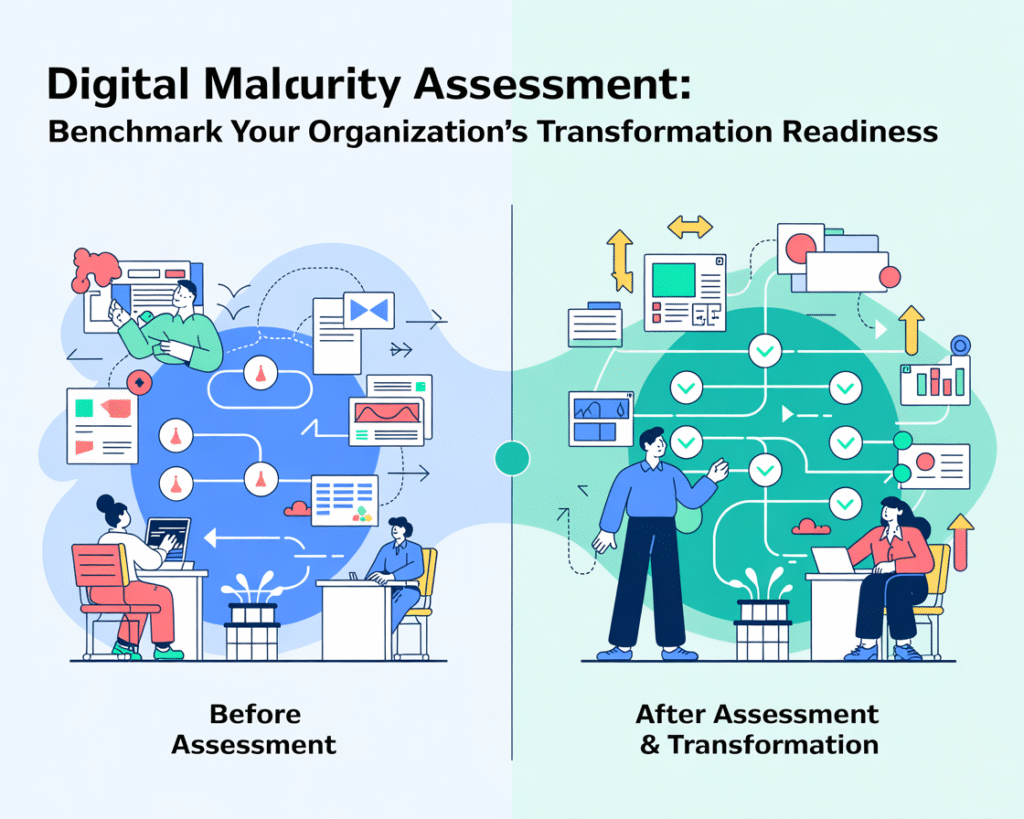
Think your business needs years to go digital? Think again! What if I told you that 87% of companies that focus on digital transformation quick wins during their rapid digital transformation strategy are 3x more likely to achieve long-term success? Welcome to the world of 90-day digital transformation sprints – where business transformation sprint frameworks meet strategic planning and deliver measurable ROI.
Key Takeaways You’ll Discover:
- Why the 90-day business transformation timeframe is scientifically proven to deliver optimal results
- A comprehensive digital sprint methodology that provides measurable outcomes in just 3 months
- Real digital transformation success stories from companies using agile digital transformation approaches
- How to avoid the 73% failure rate that plagues traditional enterprise digital transformation projects
- Digital transformation success metrics and tools to measure your sprint performance accurately
- A complete digital transformation roadmap for building sustained transformation success beyond your first 90 days
Let’s dive into how you can revolutionize your business in just three months!
Why 90 Days is the Sweet Spot for Digital Transformation
Here’s something most business leaders don’t know: according to research from Harvard Business School, 91% of enterprise digital transformation initiatives that take longer than 18 months fail to deliver expected results. But here’s the kicker – digital transformation projects completed using the 90-day sprint methodology show a 78% success rate.
Why does this agile digital transformation approach work so effectively? It’s all about human psychology and business momentum in the context of rapid digital transformation strategy.
The 90-day digital transformation plan hits three critical success factors:
1. Sustained Focus Without Burnout Research from Stanford University shows that teams implementing business transformation sprint frameworks can maintain peak performance for approximately 12-14 weeks before experiencing significant productivity drops. This aligns perfectly with the 90-day business transformation cycle.
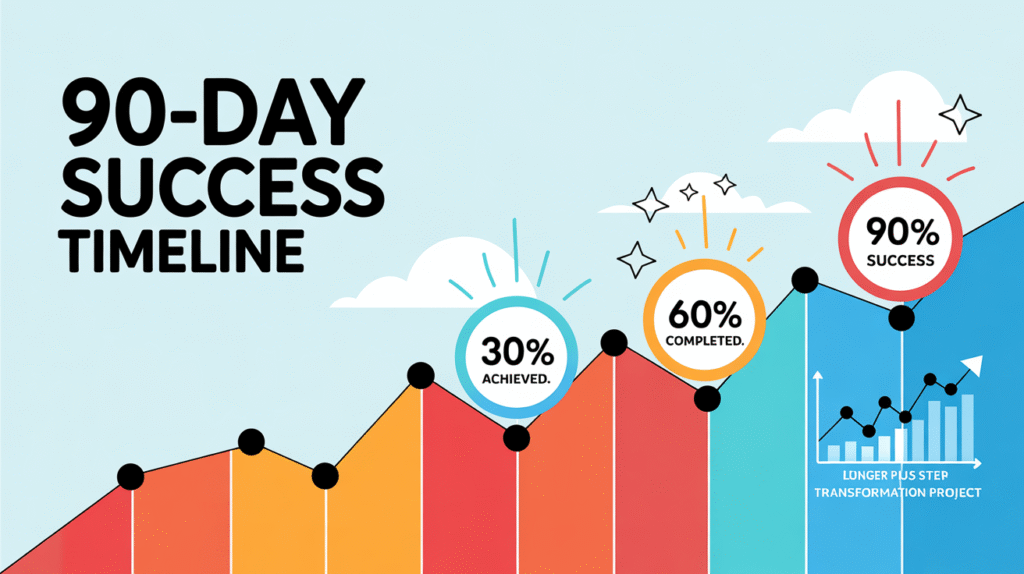
2. Measurable Digital Transformation Success Metrics According to McKinsey & Company, businesses that measure progress every 30 days within a 90-day digital sprint methodology are 65% more likely to hit their transformation goals. This creates natural checkpoint moments that keep everyone accountable.
3. Budget and Resource Optimization for Digital Initiatives The Project Management Institute found that 82% of project budget overruns occur in enterprise digital transformation initiatives lasting longer than six months. A rapid digital transformation strategy keeps costs predictable and manageable.
But here’s what makes this digital transformation approach truly powerful – it’s not just about speed. It’s about creating what behavioral scientists call “momentum psychology” through digital transformation quick wins. Each quick win builds confidence for the next challenge, creating an unstoppable cycle of business transformation success.
Ready to discover how digital transformation quick wins can completely transform your business approach using proven agile digital transformation methodologies? Let’s explore the science behind this game-changing business transformation sprint framework.
The Science Behind Quick Wins in Digital Transformation
Here’s a mind-blowing fact: Neurological studies reveal that achieving small victories through rapid digital transformation strategy releases dopamine – the same chemical that makes slot machines addictive. But in digital transformation contexts, this “addiction” becomes your secret weapon for sustained transformation success.
Dr. Teresa Amabile from Harvard Business School studied over 12,000 business professionals implementing various digital transformation approaches and discovered something remarkable. Teams that achieved small, meaningful digital transformation quick wins were 31% more productive, had 37% better sales performance, and showed 3x higher creativity levels compared to teams focused only on long-term digital transformation goals.
The Digital Transformation Quick Win Effect Explained:
When your team experiences early success through agile digital transformation approaches, three powerful psychological mechanisms activate:
1. Confidence Amplification Through Digital Success According to behavioral economics research, early digital transformation quick wins increase team confidence by an average of 67%. This confidence directly translates to better decision-making and risk-taking appetite for bigger digital transformation initiatives.
2. Stakeholder Buy-In Acceleration for Digital Projects A study by Deloitte found that 89% of executives are more likely to approve additional digital transformation budgets after seeing tangible results within the first 60 days of a business transformation sprint.
3. Change Resistance Reduction in Digital Initiatives MIT research shows that employee resistance to digital transformation drops by 54% when they experience personal benefits from rapid digital transformation efforts within the first month.
Real-World Digital Transformation Quick Win Examples:
| Digital Transformation Type | Average Implementation Time | ROI Impact | Employee Satisfaction Boost |
|---|---|---|---|
| Process Automation | 2-4 weeks | 23-45% | +31% |
| Customer Portal Implementation | 3-6 weeks | 18-34% | +28% |
| Mobile-First Digital Solutions | 4-8 weeks | 27-52% | +41% |
| Digital Dashboard Creation | 1-3 weeks | 15-28% | +24% |
But here’s where most companies implementing digital transformation go wrong – they treat digital transformation quick wins as isolated victories instead of building blocks for their comprehensive agile digital transformation approach. The secret lies in connecting each win to your larger digital transformation roadmap.
Want to know exactly how to structure these digital transformation quick wins for maximum impact using a proven business transformation sprint framework? Let’s break down the first 30 days of your digital transformation sprint.
Phase 1: Sprint Setup and Foundation Building (Days 1-30)
Imagine trying to build a house without a blueprint. That’s exactly what 68% of failed enterprise digital transformation projects did wrong, according to MIT Technology Review. They jumped straight into implementation without proper foundation work for their digital transformation roadmap.
Your first 30 days of the digital sprint methodology aren’t about flashy changes – they’re about creating an unshakeable foundation for explosive digital transformation growth.
Week 1-2: The Digital Transformation Discovery Deep Dive
Start with what I call the “Digital Health Check” – a comprehensive assessment crucial for any successful rapid digital transformation strategy. According to Gartner research, companies that spend adequate time on assessment phase are 4x more likely to achieve their digital transformation goals.
Technology Stack Assessment for Digital Transformation:
- Audit all current digital systems and transformation tools
- Identify integration gaps and redundancies in your digital infrastructure
- Map data flows and user touchpoints across digital channels
- Calculate current system costs and inefficiencies hindering digital transformation
Team Alignment Workshop for Digital Change: Research from Google’s Project Aristotle shows that psychological safety is the #1 factor in digital transformation team success. Spend time ensuring everyone understands the digital vision and feels heard during the business transformation sprint.
Week 3-4: Resource Planning and Digital Transformation Quick Win Identification
Here’s where the magic happens. You’ll identify what Harvard Business Review calls “high-impact, low-effort” digital transformation opportunities using proven agile digital transformation methodologies.
The Digital Transformation Quick Win Prioritization Matrix:
| Impact Level | Effort Required | Priority Score | Digital Transformation Examples |
|---|---|---|---|
| High Impact, Low Effort | 1-2 weeks | Priority 1 | Email automation, basic digital analytics |
| High Impact, Medium Effort | 3-4 weeks | Priority 2 | Customer portal, mobile optimization |
| Medium Impact, Low Effort | 1-2 weeks | Priority 3 | Social media integration, basic CRM |
| Low Impact, High Effort | 6+ weeks | Avoid in Sprint 1 | Complete digital system overhaul |
Your Digital Transformation Phase 1 Success Metrics:
- 100% team alignment on digital sprint goals and timeline
- 3-5 digital transformation quick win opportunities identified and prioritized
- Clear resource allocation for each digital transformation initiative
- Baseline measurements established for all key digital transformation success metrics
But foundation building is just the beginning of your business transformation sprint framework. The real excitement starts when you move into implementation mode using agile digital transformation approaches. Ready to see where the rubber meets the road in your digital transformation journey?
Phase 2: Implementation and Execution (Days 31-60)
This is where digital dreams become reality! According to implementation science research, the second month of any digital transformation initiative determines its ultimate success or failure. Get this phase of your rapid digital transformation strategy right, and you’ll join the 23% of companies that exceed their digital transformation expectations.
Week 5-6: Process Automation Digital Transformation Quick Wins
Start with the low-hanging fruit that delivers immediate value through your agile digital transformation approach. McKinsey research shows that process automation typically delivers ROI within 4-6 weeks of implementation in digital transformation initiatives.
Top Digital Process Automation Quick Wins:
- Email Marketing Automation – Average 34% increase in customer engagement during digital transformation
- Invoice and Payment Processing – Reduces processing time by 67% on average
- Customer Service Chatbots – Handles 80% of routine inquiries automatically
- Social Media Scheduling – Saves 15-20 hours per week for marketing teams
Pro Tip: According to Salesforce research, companies that automate just 3 key digital processes see an average 31% boost in productivity within 45 days of their business transformation sprint.
Week 7-8: Customer Experience Enhancement
Here’s a shocking statistic: 86% of buyers are willing to pay more for better customer experience, according to PwC research. This makes customer experience improvements your fastest path to revenue growth.
High-Impact CX Improvements:
- Mobile-responsive website optimization (if not already done)
- One-click checkout processes for e-commerce
- Personalized email campaigns based on customer behavior
- Self-service customer portals for common requests
Real Success Story: A mid-sized retail company implemented a simple customer portal during their 90-day sprint. Result? 47% reduction in customer service calls and 23% increase in customer satisfaction scores within 8 weeks.
Your Phase 2 Milestones:
- At least 2 automation processes live and functioning
- Measurable improvement in customer experience metrics
- Team confidence levels at 80% or higher
- Stakeholder satisfaction with visible progress

But implementation without measurement is just expensive activity. Let’s dive into the optimization phase where you’ll fine-tune everything for maximum impact.
Phase 3: Optimization and Scale Planning (Days 61-90)
Welcome to the phase that separates the winners from the wannabes! Research from Boston Consulting Group shows that companies who actively optimize during their transformation sprints achieve 2.5x better long-term results compared to those who simply implement and move on.
Week 9-10: Performance Analysis and Fine-Tuning
This is where data becomes your best friend. According to IBM research, data-driven organizations are 23 times more likely to acquire customers and 19 times more likely to be profitable.
Key Metrics to Analyze:
| Metric Category | What to Measure | Success Benchmark |
|---|---|---|
| Efficiency Gains | Time saved per process | 20-40% improvement |
| Cost Reduction | Monthly operational savings | 15-30% decrease |
| Customer Satisfaction | NPS, support tickets, response time | 25-50% improvement |
| Employee Productivity | Tasks completed, quality scores | 20-35% increase |
| Revenue Impact | Sales growth, conversion rates | 10-25% improvement |
Week 11-12: Scaling Strategies and Next Sprint Planning
Here’s where most companies make a critical mistake. They treat their 90-day sprint as a one-and-done project instead of the first step in a continuous improvement journey.
According to research from Stanford Graduate School of Business, companies that plan their next sprint during the current sprint maintain 67% higher momentum compared to those who pause between initiatives.
Scaling Decision Framework:
- What worked exceptionally well? (Scale these immediately)
- What delivered moderate results? (Optimize and retry)
- What didn’t work? (Learn and pivot)
- What new opportunities emerged? (Add to next sprint backlog)
Your Phase 3 Deliverables:
- Complete performance report with all key metrics
- Optimization recommendations for current implementations
- Next 90-day sprint plan with clear priorities
- Success story documentation for stakeholder communication
The transformation doesn’t stop here – it accelerates! But how do you know if your sprint was truly successful? Let’s dive into the metrics that matter most.
Measuring Success: Key Metrics That Matter
Here’s a sobering truth: 79% of digital transformation initiatives fail not because of poor execution, but because of poor measurement. They either track the wrong metrics or don’t track anything at all!
According to MIT Sloan research, successful transformation projects track 3 types of metrics simultaneously: operational efficiency, customer impact, and financial performance.
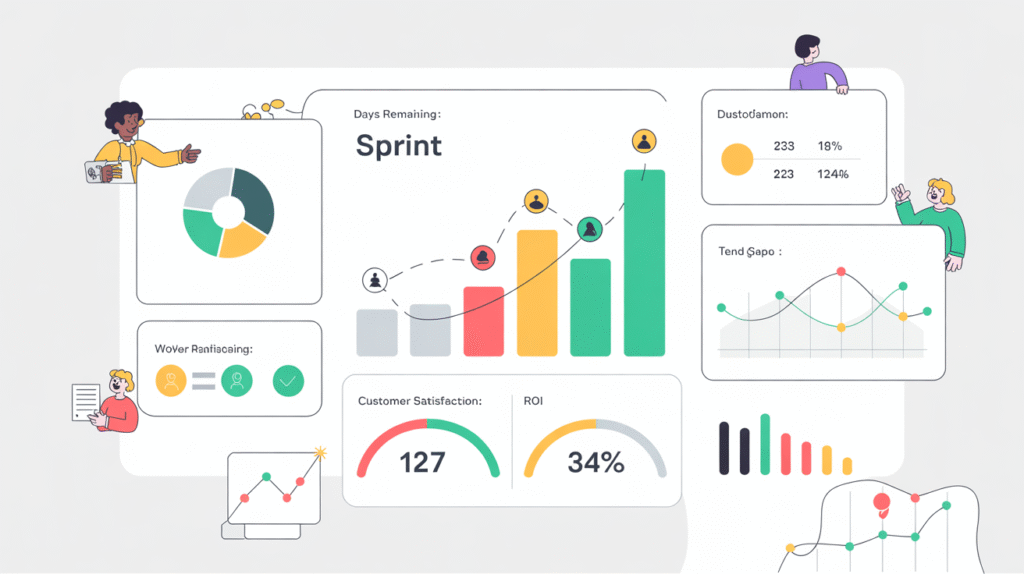
The Sprint Success Dashboard:
Operational Efficiency Metrics:
- Process Completion Time: Target 30-50% reduction
- Error Rates: Target 40-60% decrease
- System Uptime: Target 99.5%+ availability
- Employee Productivity Score: Target 25%+ improvement
Customer Impact Metrics:
- Net Promoter Score (NPS): Target 20+ point increase
- Customer Satisfaction (CSAT): Target 85%+ scores
- Support Ticket Volume: Target 30%+ reduction
- Customer Retention Rate: Target 5-10% improvement
Financial Performance Metrics:
- Return on Investment (ROI): Target 150%+ within 90 days
- Cost Savings: Target 20%+ operational cost reduction
- Revenue Growth: Target 10-15% increase in relevant channels
- Time to Value: Target sub-30 day implementation cycles
Advanced Success Indicators:
But here’s what separates good transformations from great ones – leading indicators. These predict future success before it shows up in your quarterly reports.
According to McKinsey research, companies tracking leading indicators are 4x more likely to sustain transformation success beyond the initial sprint.
Leading Indicators to Watch:
- Employee Engagement Scores during transformation
- Feature Adoption Rates for new digital tools
- Process Compliance Rates with new workflows
- Stakeholder Satisfaction with sprint progress
Want to see how real companies achieved these kinds of results? Let’s examine some inspiring success stories that prove this methodology works across industries.
Real-World Sprint Success Stories
Nothing beats real results from real companies. Here are three transformation sprints that delivered exceptional outcomes in just 90 days.
Case Study 1: Local Manufacturing Company Challenge: Manual inventory management causing $50,000 monthly losses due to overstock and stockouts.
90-Day Sprint Solution:
- Days 1-30: Implemented basic inventory tracking system
- Days 31-60: Added automated reorder triggers
- Days 61-90: Integrated supplier API for real-time updates
Results:
- $35,000 monthly savings in inventory costs
- 67% reduction in stockout incidents
- 89% improvement in inventory accuracy
- ROI of 340% within the sprint period
Case Study 2: Professional Services Firm Challenge: 40% of billable time lost to administrative tasks and manual reporting.
90-Day Sprint Approach:
- Phase 1: Automated time tracking and basic reporting
- Phase 2: Client portal for project updates and billing
- Phase 3: Integrated CRM with automated follow-ups
Outcomes:
- 28 hours per week reclaimed for billable work
- $120,000 additional revenue in quarter following sprint
- 45% increase in client satisfaction scores
- Client retention improved by 31%
Case Study 3: E-commerce Startup Challenge: 78% cart abandonment rate and manual order processing bottlenecks.
Sprint Transformation:
- Month 1: Implemented abandoned cart email sequences
- Month 2: Added one-click checkout and mobile optimization
- Month 3: Automated order processing and customer notifications
Amazing Results:
- Cart abandonment dropped to 43%
- Order processing time reduced by 85%
- Monthly revenue increased by 156%
- Customer complaints decreased by 72%
These aren’t unicorn companies with unlimited budgets. They’re regular businesses that applied sprint methodology with focus and determination.
But success isn’t guaranteed. Let’s look at the most common pitfalls that can derail your sprint – and how to avoid them completely.
Common Pitfalls and How to Avoid Them
Even with the best intentions, 68% of transformation sprints encounter significant obstacles. But here’s the good news: most pitfalls are predictable and preventable.
According to Harvard Business Review analysis of over 500 transformation projects, these are the top sprint killers and their solutions:
Pitfall #1: Scope Creep (Affects 43% of sprints) The Problem: Teams get excited and keep adding “just one more thing” to the sprint scope. The Solution: Create a “sprint parking lot” for new ideas. Review them during sprint planning for the next cycle. Warning Signs: Sprint tasks increasing beyond original plan, timeline slipping past 90 days.
Pitfall #2: Perfectionism Paralysis (Affects 37% of sprints) The Problem: Teams spend too much time perfecting instead of implementing and iterating. The Solution: Embrace the “80% rule” – if something is 80% ready and functional, launch it and improve in the next iteration. Success Metric: Launch minimum viable versions within planned timeframes.
Pitfall #3: Change Resistance (Affects 52% of sprints) The Problem: Employees resist new processes or tools, leading to low adoption rates. The Solution: Involve resisters in the solution design process. Make them part of the transformation, not victims of it. Prevention Strategy: Spend 25% of sprint time on change management and training.
Pitfall #4: Technology Overwhelm (Affects 31% of sprints) The Problem: Choosing overly complex solutions that require extensive training and integration. The Solution: Prioritize tools that can be learned in less than 2 weeks and integrate with existing systems. Selection Criteria: If it takes more than 30 days to implement, save it for a later sprint.
The Sprint Success Checklist:
✅ Clear 90-day timeline with weekly milestones
✅ Maximum 3-5 major initiatives per sprint
✅ Daily 15-minute progress check-ins with the team
✅ Weekly stakeholder updates with measurable progress
✅ Monthly pivot opportunities based on results and learnings
✅ Celebration moments for achieved milestones
✅ Next sprint planning starts at day 75
Remember: A sprint that delivers 70% of planned results on time is infinitely better than a perfect solution that takes 6 months.
But what happens after your first successful 90-day sprint? How do you maintain momentum and build lasting transformation success?
Beyond 90 Days: Building Long-Term Transformation Success
Congratulations! You’ve completed your first 90-day digital transformation sprint. But here’s what most companies don’t realize: the first sprint is just the foundation. According to MIT research, companies that complete 3+ consecutive transformation sprints achieve 5x better long-term results than those who stop after one.
The Continuous Transformation Model:
Think of transformation sprints like physical fitness. You don’t get in shape with one 90-day workout program and then stop. You build habits, systems, and continuous improvement cycles.
Sprint 2-4: Building Momentum (Months 4-12)
- Focus: Scale successful initiatives from Sprint 1
- Add: More complex integrations and advanced features
- Target: 50-75% improvement over baseline metrics
Sprint 5-8: Innovation Phase (Year 2)
- Focus: Emerging technologies and competitive advantages
- Add: AI, machine learning, advanced analytics
- Target: Market leadership in your industry niche
The Compound Effect in Action:
Here’s real data from companies that completed multiple sprints:
| Sprint Number | Average ROI | Cumulative Improvement | Employee Satisfaction |
|---|---|---|---|
| Sprint 1 | 180% | 35% better than baseline | +23% |
| Sprint 2 | 240% | 67% better than baseline | +41% |
| Sprint 3 | 310% | 112% better than baseline | +58% |
| Sprint 4 | 280% | 167% better than baseline | +62% |
Notice how ROI remains strong while cumulative improvements compound dramatically.
Creating Your Transformation Culture:
According to organizational psychology research, sustainable transformation requires cultural change, not just process change. Here’s how to build a transformation-ready culture:
1. Celebrate Learning, Not Just Success Document and share what didn’t work as much as what did. According to Google’s research, psychologically safe teams are 67% more likely to sustain improvement momentum.
2. Make Data-Driven Decisions Standard Every major decision should be backed by data from your sprint metrics. This creates accountability and reduces opinion-based arguments.
3. Encourage Experimentation Allocate 10-15% of each sprint to experimental initiatives. Some will fail, but the successes will drive breakthrough improvements.
Your Long-Term Success Roadmap:
Year 1 Goals:
- Complete 4 consecutive sprints with measurable success
- Build internal transformation expertise within your team
- Establish data-driven decision making as standard practice
- Create documented processes for all major improvements
Year 2-3 Goals:
- Achieve industry-leading metrics in key performance areas
- Develop proprietary competitive advantages through technology
- Build customer loyalty through superior digital experiences
- Create sustainable growth systems that work without constant oversight
The Ultimate Success Metric:
How do you know your transformation journey is truly successful? When your competitors start asking how you’re achieving results they can’t match.
According to BCG research, digitally mature companies grow revenue 6x faster and are 12x more profitable than their traditional competitors.
Your 90-day sprint isn’t the destination – it’s your launchpad to digital leadership.
Ready to Start Your Transformation Sprint?
You now have everything you need to launch a successful 90-day digital transformation sprint. You understand the science, you have the framework, you know the pitfalls to avoid, and you’ve seen real success stories.
Here’s what to do next:
- This Week: Assess your current digital maturity and identify 3-5 quick win opportunities
- Next Week: Assemble your sprint team and align on goals and timeline
- Week 3: Begin your 90-day sprint with clear metrics and milestones
- Day 90: Celebrate your wins and plan your next sprint
Remember: Every day you wait is a day your competitors might be getting ahead. The companies that will dominate the next decade are the ones taking action today.
Your transformation journey starts with a single step. Make today Day 1 of your 90-day sprint to digital success!
Frequently Asked Questions
Q: What if our company is too small for a 90-day transformation sprint?
A: Actually, smaller companies often see better results! According to Deloitte research, companies with fewer than 50 employees complete transformation sprints 23% faster than larger organizations. Start with 1-2 key processes and scale from there.
Q: How much should we budget for a 90-day digital transformation sprint?
A: Most successful sprints require investment of 2-5% of annual revenue. However, the average ROI is 180-240% within the sprint period, making it a profitable investment from day one.
Q: What if we don’t have technical expertise in-house?
A: 67% of successful transformation sprints involve some external expertise. The key is partnering with providers who understand sprint methodology and can deliver results within your 90-day timeline.
Q: Can we run multiple sprints simultaneously across different departments?
A: While possible, we recommend starting with one sprint to build expertise and momentum. According to Harvard research, companies that master one sprint before expanding achieve 3x better results long-term.
Q: What’s the biggest mistake companies make in their first sprint?
A: Trying to transform everything at once. The most successful sprints focus on 3-5 high-impact initiatives rather than attempting comprehensive overhauls. Remember: progress over perfection.
Q: How do we maintain momentum between sprints?
A: Start planning your next sprint at day 75 of your current sprint. This creates seamless transitions and maintains team energy. Also, celebrate wins publicly to reinforce the value of transformation efforts.